

Case Study: RV Battery Systems
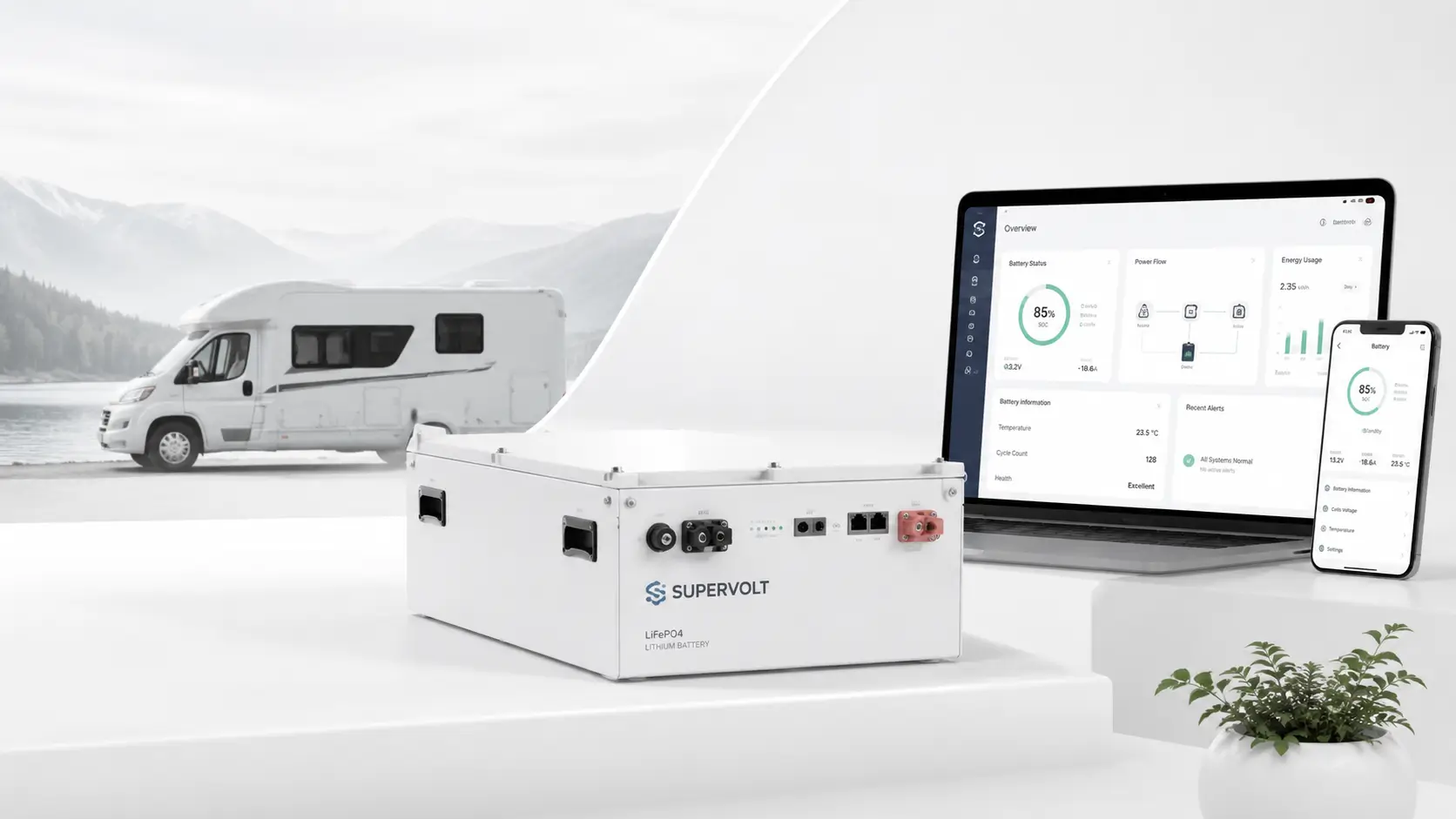
SuperVolt is a Germany-based company supplying LiFePO4 batteries for motorhomes and other RV battery systems. Current packs include a Bluetooth-enabled Battery Management System (BMS), and the new series adds two RJ45 ports for RS485 communication with the BMS. To expand connectivity.
Last updated: 3 Jul 2026
This case study covers RV Battery Systems: the request the client brought to JuTech, the solution we designed and built, and the impact it delivered.
Story
Short Overview
SuperVolt, a Germany-based company specializing in advanced energy solutions for motorhomes and RV systems, is expanding its product line with a connected solution that gives users real-time insight and remote control over battery performance. The new system allows RV owners to track key parameters, manage their energy setup remotely, and ensure safe, efficient operation — all through intuitive web and mobile applications.
Project Background
SuperVolt's existing mobile app connected to the battery's BMS over BLE but ran on a legacy, tightly coupled codebase, and the UI no longer matched real RV usage. As the product line evolved and new hardware interfaces were planned, these limitations became evident. Therefore, SuperVolt turned to Indeema to improve and modernize the mobile app, laying a stronger foundation for what comes next.
Summary
Industry
Energy, Renewables/Solar and Wind, High-Tech, Smart Home, Smart City, Consumer IoT
Service
R&D Services, UI/UX Design, Mobile App Development, Android App Development, iOS App Development, IoT App Development, Software testing service, IoT Development, IoT Consulting Services, Tech Advisory.
Team:
8 Engineers
Client’s Location:
USA
Lifetime
2024 - ongoing
+50%
Battery Performance Efficiency
-40%
Power Consumption Issues
24/7
Smart Energy Monitoring
Request
What was the customer's request?
SuperVolt asked Indeema to modernize its mobile bms app — the companion app that connects to the battery's BMS and shows key status (state of charge, voltage, temperature). The brief was to refresh the UI and add new features to enhance the ownership experience and provide added value to SuperVolt's LiFePO4 batteries sold in Germany.
What did the client already have?
SuperVolt came with an existing mobile app that connected to the battery's BMS (via Bluetooth) and displayed core status such as state of charge, voltage, and temperature. The app's UI and user flows needed refinement to make the experience more user-friendly and consistent with real RV use.
Solution
Where did we start?
We began with a code review to confirm whether the new features could be built on the existing architecture, estimate effort, and suggest improvements. In parallel, R&D translated the scope of feature expansion and UI update into concrete user flows (e.g., firmware update), identified target users and usage contexts, and considered technical constraints to propose the most effective approach.
Process
UX/UI Design
The client provided an initial design, which we refined to make the app more user-friendly. We identified the primary user groups and considered their behavior and usage context — where and how they use the app — and reflected these insights in the updated UI.
Mobile Development
Following a focused code review of the existing app, we concluded that extending the legacy architecture would be impractical and more expensive than rebuilding. We therefore proceeded with a clean implementation from scratch to provide a stable, scalable base for upcoming features.
Maintenance
We continue iterating on the app with focused feature updates and UX refinements. As the third-party BMS firmware evolves, we add support for new battery capabilities and ensure the app remains stable, scalable, and aligned with the latest device functionality.
Project Challenges
and Our Suggestions
Limited OEM Documentation (Firmware & Hardware)
The batteries were sourced from China, and the vendor documentation was incomplete. This created uncertainty around expected device behavior and interfaces. We addressed this by performing reverse engineering, arranging calls with the OEM, validating the firmware in practice, and reporting discrepancies to reconcile the docs with real behavior.
Legacy App Code Constraints
The app had to support newer iOS versions while still working with legacy batteries, with only minimal changes to the existing codebase. We used architectural patterns to encapsulate legacy logic into isolated modules, enabling targeted updates without a full rewrite.
Impact
By transforming the companion mobile app into a clear, user-friendly experience, we turned it into a true value-add for SuperVolt's battery line — helping the client increase sales. The rebuild established a clean, scalable foundation, enabling continuous feature releases and strengthening SuperVolt's positioning in the RV market.
Technical Highlights
- Python
- AWS IoT
- React Native
Before:
- Old app
- Initial app design requiring UX refinement
After:
Delivered a new, more user-friendly mobile app; ongoing maintenance and feature updates.
- New app built from scratch
- Stable, scalable foundation for new features
- Updated, user-friendly UI

Live AI Showcase.
Explore the systems we’ve built through an interactive live demo experience the future of digital products and the power of AI firsthand.
