

Case Study: Healthcare AI Diagnostic Platform
The project aimed to develop an AI-driven diagnostic platform that could assist doctors in identifying potential diseases faster and more accurately using patient records and medical imaging data.
Last updated: 2 Jul 2026
This case study covers Healthcare AI Diagnostic Platform: the request the client brought to JuTech, the solution we designed and built, and the impact it delivered.
Story
Short Overview
The project aimed to develop an AI-driven diagnostic platform that could assist doctors in identifying potential diseases faster and more accurately using patient records and medical imaging data. The system was designed to act as a decision-support tool, enhancing clinical efficiency rather than replacing human expertise.
Project Background
Healthcare providers often face challenges with delayed diagnosis due to large volumes of patient data and limited time for manual analysis. The client wanted to reduce diagnostic delays and improve accuracy by leveraging AI models capable of analyzing complex medical data in real time.
Summary
Industry
Healthcare, AI, MedTech
Service
AI Development, Data Engineering, Backend Systems, Healthcare Software Development
Team:
3 AI Engineers, 2 Backend Developers, 1 PM
Client’s Location:
USA / Europe
Lifetime
2025
+40%
Faster Diagnostic Support
-55%
Manual Analysis Time
100%
Secure Data Compliance
Request
What was the customer's request?
The client required an AI system capable of analyzing medical data and generating diagnostic insights to support doctors in early disease detection. The platform needed to process structured and unstructured healthcare data and provide explainable results to assist clinical decision-making.
What did the client already have?
The client had access to anonymized medical datasets and a conceptual idea of AI-assisted diagnosis. However, they lacked a production-ready AI pipeline, secure backend infrastructure, and a usable clinical interface for doctors.
Solution
Where did we start?
We began with a medical workflow analysis to understand how doctors interpret patient data and how AI could integrate into existing diagnostic processes without disrupting clinical routines.
Process
Requirements phase
We conducted a structured discovery phase with medical stakeholders to understand real clinical workflows and translate them into system requirements. A detailed Functional Requirements Document (FRD) was created, defining disease categories, medical data inputs, AI accuracy targets, and system performance expectations. We also established user roles, data security standards, and healthcare compliance guidelines. This phase ensured a clear, clinically aligned foundation for building an accurate and reliable AI diagnostic system.
Data Engineering & Preparation
We built a structured data pipeline to clean, normalize, and anonymize medical data from multiple sources including patient records and imaging datasets. Special attention was given to ensuring compliance with healthcare data privacy standards while maintaining dataset quality for training AI models.
AI Model Development
Machine learning and deep learning models were developed to analyze both structured data and medical images. These models were trained to detect anomalies, classify conditions, and generate predictive insights. A key focus was improving accuracy while ensuring the outputs remained explainable for clinical use.
Backend & Cloud System
A secure cloud-based backend was built to handle large-scale medical data processing and real-time inference requests. The system was designed to ensure low-latency responses while maintaining strict data security and access control for healthcare environments.
Frontend Diagnostic Dashboard
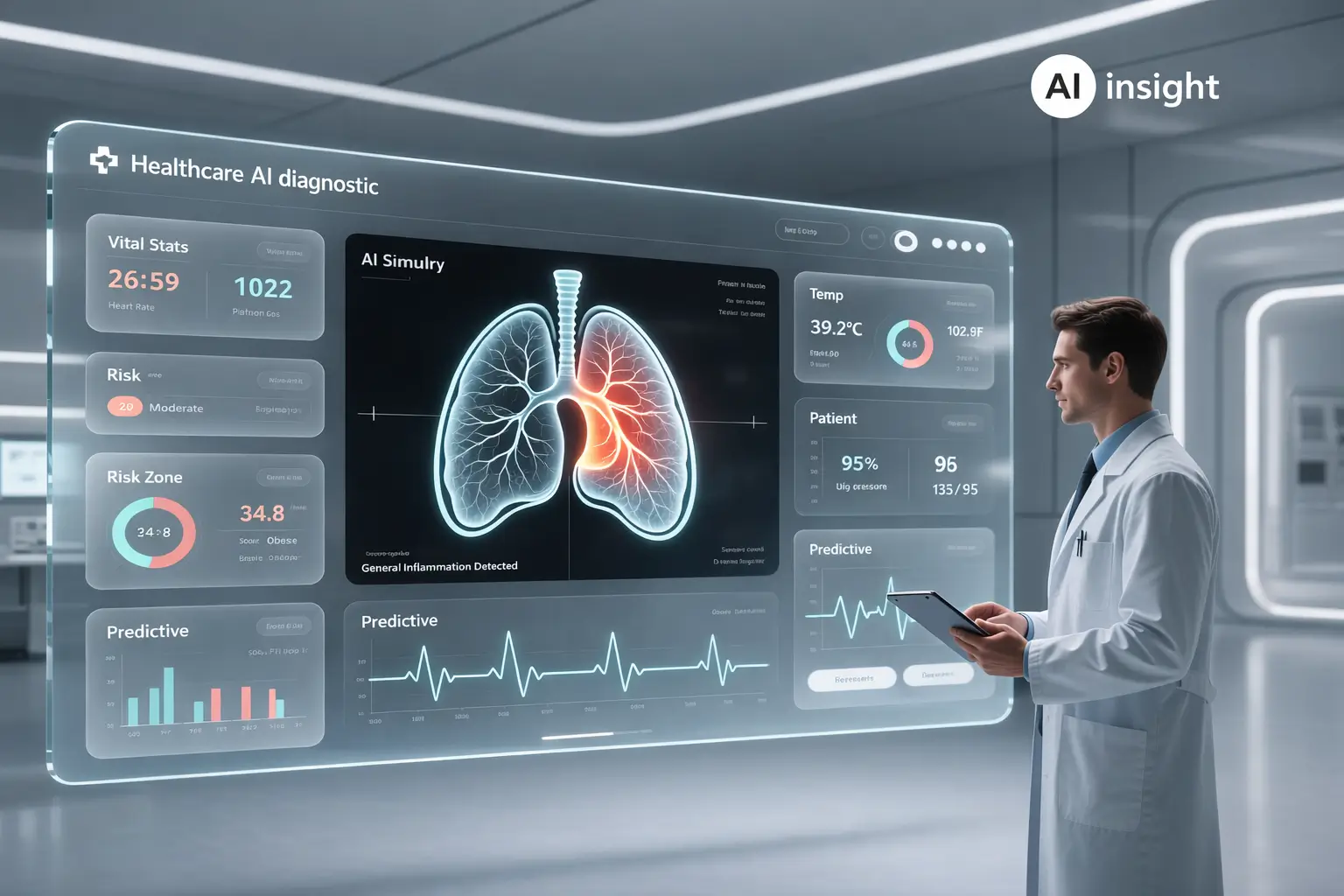
We developed a clinician-focused dashboard that displayed AI-generated diagnostic insights in a simple and interpretable format. It included patient summaries, scan analysis results, risk scores, and recommendation sections to support faster clinical decision-making.
Project Challenges
and Our Suggestions
High accuracy requirement in critical decisions
We improved model performance using rigorous validation techniques and balanced medical datasets to reduce bias and increase diagnostic accuracy. Confidence scoring was introduced to quantify prediction reliability, helping clinicians understand the certainty of each result. This ensured more transparent, trustworthy, and clinically usable AI-driven diagnostic outputs.
Handling sensitive patient data securely
We implemented data anonymization, encrypted storage, and role-based access control to protect sensitive medical information. This ensured patient privacy, secure data handling, and compliance with healthcare standards while allowing only authorized users to access and process critical diagnostic data.
Interpretability of AI results
We integrated explainable AI layers that clearly highlight the key factors behind each diagnosis. This made predictions more transparent, helping doctors understand the reasoning behind outputs and improving trust, usability, and clinical confidence in AI-assisted decision-making within healthcare workflows.
Impact
The platform improved diagnostic speed by enabling real-time AI insights, reducing manual analysis time, and supporting earlier detection of health risks. It also ensured consistent, data-driven recommendations and was built on a secure, scalable cloud architecture for reliable healthcare deployment.
Before:
- Manual diagnosis based on individual analysis
- High dependency on time-intensive medical review
- Fragmented patient data sources
- Limited decision support tools
- No AI-assisted insights
After:
- AI-powered real-time diagnostic support system
- Faster and more consistent analysis of patient data
- Unified patient data processing pipeline
- Clinical decision support dashboard
- Explainable AI insights for doctors

Live AI Showcase.
Explore the systems we’ve built through an interactive live demo experience the future of digital products and the power of AI firsthand.
